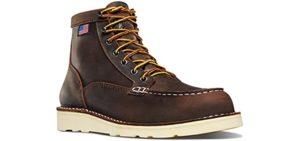
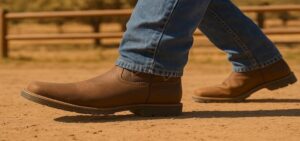
Diabetes can damage the nerves and reduce blood flow in the feet, so a small blister or cut can go unnoticed and heal slowly.[1] That makes boot fit and protection more important than usual.
A good boot for diabetic feet has a roomy, deep toe box, a smooth interior with few seams, cushioning, and a lace or strap closure that holds the foot in place. Below we cover what to look for and review four boots we’ve checked against their listings and makers’ pages.
If you have a foot condition or ongoing foot pain, talk to a doctor or podiatrist. Work boots can add comfort and support, but they are not a medical treatment.

Key Specs Compared
Numbers match the reviews below (tap to jump).
| # | Toe | Waterproof | Outsole |
|---|---|---|---|
| 1 | Steel | Not stated | Rubber |
| 2 | None (soft toe) | Yes | Rubber |
| 3 | None (soft toe) | Not stated | Rubber |
| 4 | Steel | Not stated | Rubber |
– = not stated on the Amazon listing or the maker’s site · Specs as stated by the listing or maker, not tested by us; check the listing before you buy
How Does Diabetes Affect Your Feet?
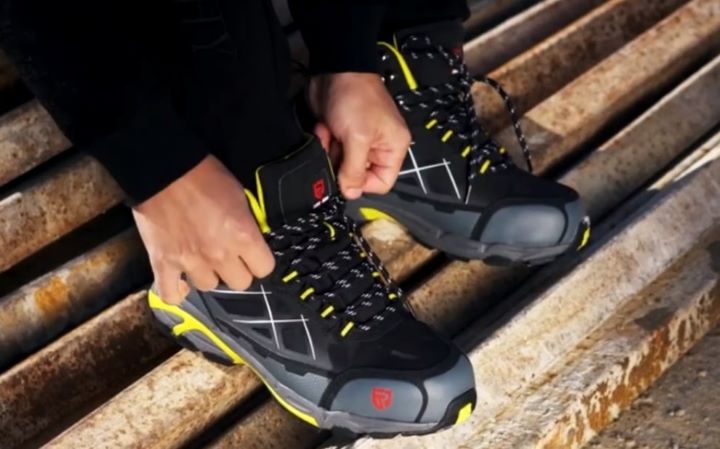
Before we discuss work boots for Diabetic feet, here’s how diabetes can affect your feet over time.[1][2]
- Nerve Damage – High blood glucose over time can damage nerves in the feet (peripheral neuropathy). Feet may feel numb, tingly or painful, and you may not feel a blister or cut.
- Improper Circulation – Diabetes can reduce blood flow to the feet, so sores and injuries heal more slowly.
- Infection – An unnoticed injury combined with slow healing can turn into a foot ulcer or infection. Check your feet every day and see a doctor about any sore that doesn’t heal.[1][2]
What Should You Look for in Diabetic Work Boots?
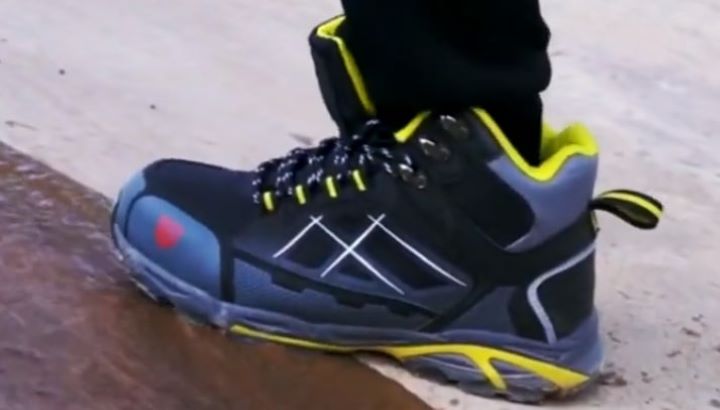
First, the boot has to meet the hazards of your job. Where there’s a risk of foot injury, OSHA requires protective footwear, usually a steel, alloy or composite safety toe.[3] In addition, waterproofing and electrical hazard-safe materials may be required, and most importantly, a slip and oil-resistant outsole.[4][5]
Besides this, you need to consider the following in a work boot for feet affected by Diabetes;
- Fit – The fit is essential, as your feet may develop deformities or become swollen because of your condition. Therefore, I advise choosing a roomy toe box or a wider fit, along with more flexible and supple uppers, to help reduce pressure on our feet. Footwear guidelines for people with diabetes stress enough length, width and depth for the shape of your feet.[6]
- Seam Free – You want the least friction and irritation on your feet, so look for a seam-free interior with no scratchy bits or edges. Also, please ensure that the heel won’t chafe your feet and that there is a smooth, moisture-wicking lining to keep feet dry.
- Adjustable Closure – Laces or straps keep the foot from sliding forward inside the boot, which helps prevent rubbing. Diabetes footwear guidance recommends them over slip-ons.[6][7]
- Comfort is Key – Good underfoot comforts, such as a cushioned footbed and midsole, are ideal for easing pressure and absorbing impact, .
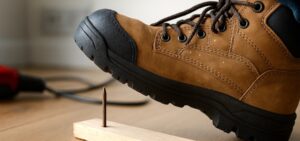
- Underfoot Protection – This is critical if your feet become numb. An underfoot shank, such as steel, fiberglass, or composite, will help prevent sharp objects from puncturing your work boots and injuring your feet.
Features of Good Diabetic Work Boots
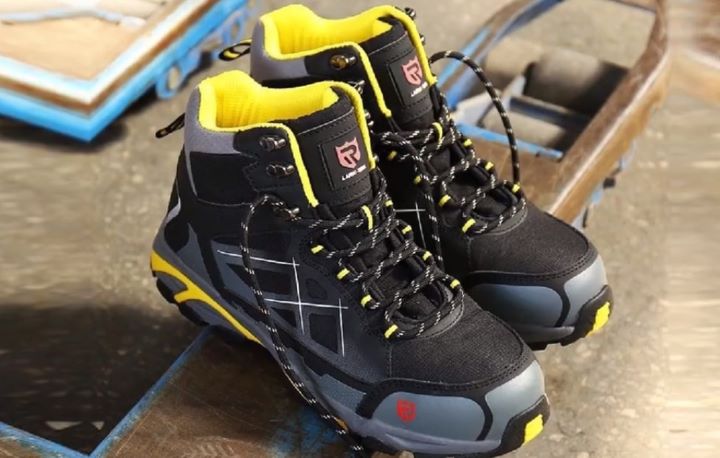
- Uppers Design – Look for uppers that are more roomy and relaxed in fit with a roomy toe box.
- Size and Fit – Work boots for people with diabetes are usually available in wide and extra-wide widths to accommodate foot conditions such as swelling and deformities. Extra-depth designs are also available that accommodate orthotic devices.
- Uppers Materials – Leather, mesh, and softer and flexible uppers materials are advised. Seam-free interior lining provides less friction and irritation.
- Comfort Features – Comfort features include a cushioned footbed, shock-absorbing midsole, memory foam, EVA, and gel. A moisture-wicking interior lining that keeps your feet dry and odor-free.
- Safety Features – Choose a steel, composite or alloy safety toe if your job requires one; any of the three can meet ASTM F2413. Add electrical hazard protection if you work around live circuits, and look for slip- and oil-resistant outsoles.
- Outsole – A rubber outsole with good tread helps on slick floors.
Our Picks: Diabetic Work Boots
These four boots focus on room, cushioning and an adjustable closure. Only two have a safety toe; the others are for light-duty work without a safety-footwear requirement. Shopping through our links helps keep this guide free, at no extra cost to you.
1


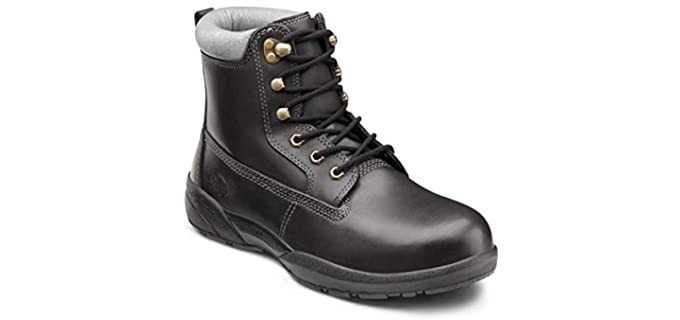
The Dr. Comfort Protector is a steel-toe work boot built on a diabetic-shoe pattern, with extra depth and wider widths.
- Steel toe – Protective toe cap rated to ASTM F2413.[4]
- Extra depth and wide widths – Room for swelling or a custom insert.
- Lace-up closure – Adjustable fit.
- Removable cushioned footbed – With added gel insoles.
- Rubber outsole – Slip-resistant.
2


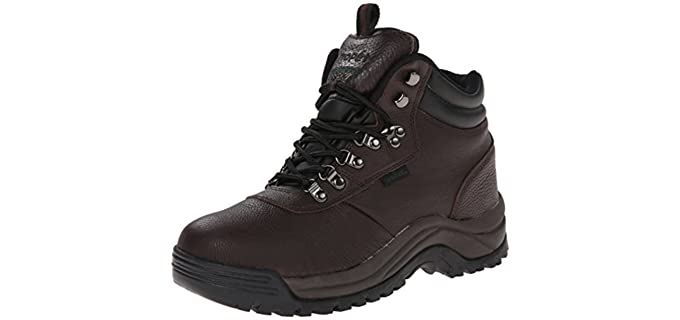
The Propét Cliff Walker is a waterproof leather boot coded for Medicare’s A5500 diabetic footwear benefit. It has no safety toe, so it suits light-duty work only.
- Medicare A5500 coded – Eligible under Medicare’s therapeutic shoe coverage when prescribed.
- Waterproof Sealtex construction – Full-grain leather with a sealed lining.
- Removable footbed – Room for a custom orthotic.
- Slip-resistant rubber outsole – For wet surfaces.
Learn more about the extra-wide work boots here.
3


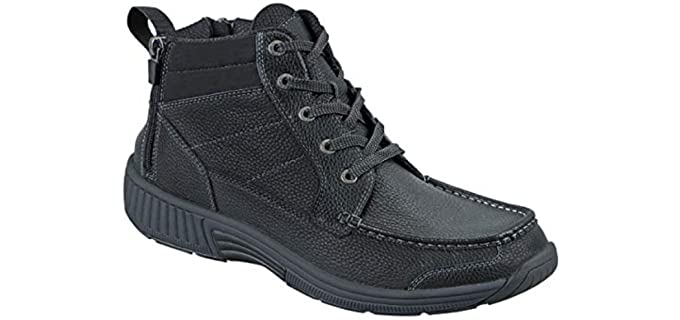
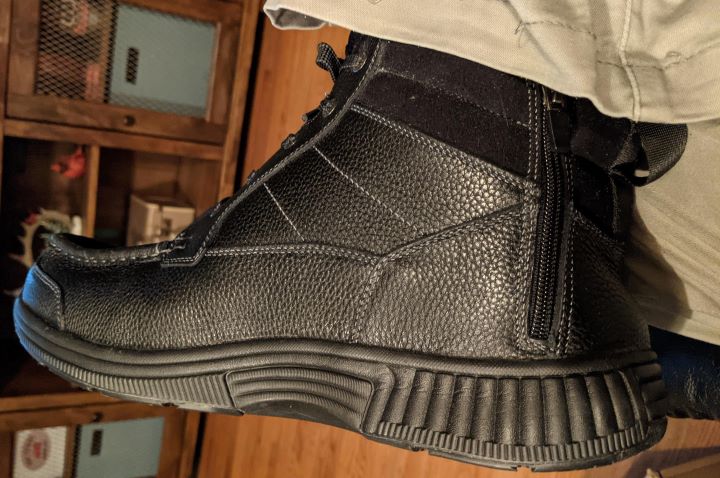
The Orthofeet boot is a soft-toe orthopedic walking boot, not a safety-toe job-site boot. It suits people who need extra room and cushioning for light-duty work or daily wear.
- Orthotic insole – Removable, with anatomical arch support.
- Roomy, soft upper – Designed to limit pressure points.
- Easy entry – Zippers at the back make it easier to put on and take off.
- Non-slip rubber outsole – For everyday surfaces.
4


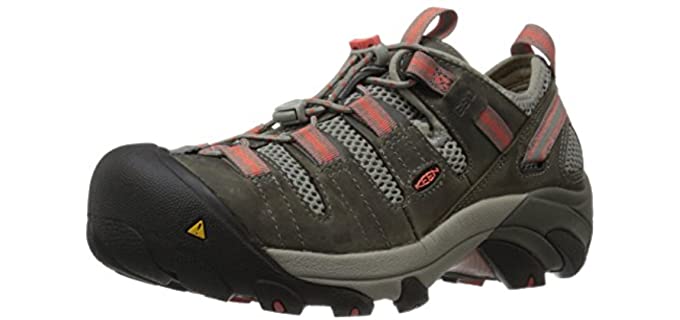
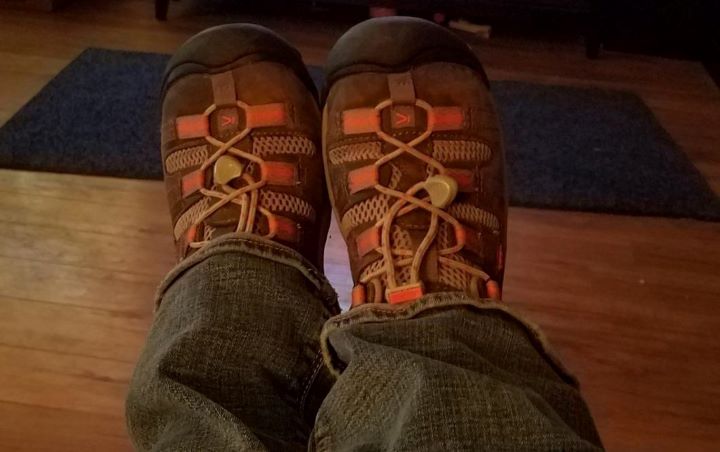
The KEEN Utility Atlanta Cool is a low-cut women’s work shoe with an asymmetrical steel toe, a wide toe box and wider widths.
- Asymmetrical steel toe – Rated to ASTM F2413, with EH protection.[4]
- Leather and mesh upper – Mesh panels and lining help airflow.
- Dual-density EVA midsole – Cushioning and support.
- Lace-up closure – Adjustable fit.
Index Table: Diabetic Work Boots Compared
| No. | Product | Image | Features | Brand |
|---|---|---|---|---|
| 1 | DR. Comfort Men's Protector - Diabetic’s Work Boots |  |
| DR. Comfort |
| 2 | Propét Men's Cliff Walker - Diabetic’s Wide Feet's Work Boots | 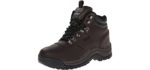 |
| Propét |
| 3 | Orthofeet Men's Pain Relief - Orthopedic Walking Boot | 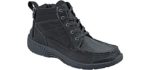 |
| Orthofeet |
| 4 | Keen Utility Women's Atlanta Cool-M - Steel Toe Work Shoe | 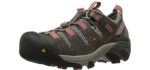 |
| Keen Utility |
Sources
General background on footwear safety and foot health. This is not medical advice; see a doctor or podiatrist about foot pain or a foot condition.
- NIDDK (NIH): Diabetes & Foot Problems. Accessed October 17, 2026.
- MedlinePlus (NIH): Diabetic Foot. Accessed October 17, 2026.
- OSHA: 29 CFR 1910.136 – Foot protection. Accessed October 17, 2026.
- ASTM International: F2413 Standard Specification for Performance Requirements for Protective (Safety) Toe Cap Footwear. Accessed October 17, 2026.
- CCOHS: Safety Footwear. Accessed October 17, 2026.
- van Netten JJ et al., Journal of Foot and Ankle Research (PMC): Diabetic Foot Australia guideline on footwear for people with diabetes. Accessed October 17, 2026.
- Royal College of Podiatry: Footwear advice to reduce the risk of amputation. Accessed October 17, 2026.
Update History
- Oct 2026: Checked all picks against their listings and makers’ pages; removed the Durango Rebel and Wolverine Wellington because diabetes footwear guidance recommends laces or straps over pull-ons; removed the uncited claim that alloy toes are better; marked the Propét Cliff Walker and Orthofeet as soft-toe boots; fixed the KEEN Atlanta Cool Key Specs to steel toe; completed the Key Specs table. Earlier this month we removed the Merrell Moab 2 Mid, Propét Ridge Walker, Skechers Workshire Condor, Columbia Newton Ridge and Timberland PRO Titan (unavailable).
- Jul 2025: Added Merrell Moab 2 Mid Work Boot
- Jun 2025: Added Propét Ridge Walker Work Boot
- Jan 2022: Added Durango Rebel Work Boot
- Nov 2021: Added Orthofeet Pain Relief Work Boot
- Oct 2021: Added DR. Comfort Protector Work Boot and Wolverine Wellington
- Dec 2020: First published
Views: 118