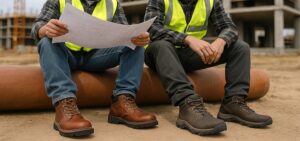
HVAC stands for heating, ventilation, and air conditioning. It is an occupation where you work with different systems used for moving air between indoor and outdoor areas, along with heating and cooling systems in residential and commercial buildings. These systems keep you warm and cozy in the winter and cool and fresh in the summer. Working with these systems has hazards and discomforts; therefore, you may need the right work boots for this occupation.[2][3][5]
In this article, we will examine work boots specifically for HVAC, work boots that provide good comfort, and work boots that provide the much-needed safety features for this type of work.

Key Specs Compared
Numbers match the reviews below (tap to jump).
| # | Toe | Safety rating (maker-stated) | Waterproof | Insulation | Height | Outsole |
|---|---|---|---|---|---|---|
| 1 | Carbon-fiber | ASTM F2413 + EH | Yes | 600g | 8" | Rubber lug |
| 2 | Steel | ASTM F2413 + EH | Yes | Insulated | Ankle | Rubber |
| 3 | Soft toe | Not confirmed | Yes | Not confirmed | Ankle | Rubber |
| 4 | Steel | ASTM F2413 + EH | Yes | Not confirmed | 6" | Rubber lug |
| 5 | Steel | ASTM F2413 | Water-resistant | Not confirmed | Ankle | Rubber |
– = not stated on the Amazon listing or the maker’s site · Specs as stated by the listing or maker, not tested by us; check the listing before you buy
Necessary Features for an HVAC Work Boot
The most important thing about an HVAC work boot is that it gives you the foundation to help reduce foot pain and fatigue.[1] You will be on your feet most of the day.[4] You will need a comfortable work boot that supports the arches of your feet and provides good shock-absorbing cushioning.
When choosing your work boot, consider its fit and adaptability to different weather conditions. It would be best to have a comfortable fit that won’t be too loose or cause any pressure on your feet, whether working in hot or cold weather.
Other than that, here are a few other features vital in good work boots for HVAC.[6]
- Breathable – When working in very hot weather and conditions or with heating systems, you will want a breathable work boot with a moisture-wicking lining to keep your feet dry and cool.
- Grippy – Because floor surfaces may be slippery and wet or even oily in the different areas where you will be working, it is a very good choice to have a grippy and slip-resistant outsole on your work boots. I would go as far as saying to go for a slip- and oil-resistant outsole.
- Well Cushioned – For comfort, choose a boot with a cushioned midsole to absorb shock and a softer insole that provides a comfortable platform for your feet, since you will be standing most of the day.
- Insulated – In colder weather conditions, you may consider an insulated work boot to keep your feet warm and protected. You may want a warmer, insulated work boot, especially when working with cooling systems in icy areas.
- Electrical Hazard Safe – As you will be working with electricity, it is extremely important that your work boots are electrical hazard safe and are maker-rated to the ASTM standards for electrical hazard safety.[7]
- Water Resistant – Working with cooling systems and air conditioning can especially get you into wet situations. Rain and wetness may occur because you will be working indoors and outdoors. So, opting for a waterproof or water-resistant work boot is always better.
Optional Features
There are also a few optional features when it comes to your HVAC work boots;
- Profile Height – Some individuals prefer a workbook that has a higher profile or a higher ankle length, such as 8-inch work boots, rather than the six-inch work boots, because they are routinely working on uneven surfaces, and they may be more prone to spraining their ankles. Extra coverage for your ankles can provide stability and protection against sprains and strains.
- Mark-Resistant Outsole – Because you may be working indoors, you do not want to leave black scuff marks on your clients’ floors. So, look for a work boot with a mark-resistant outsole.
- Type and Fit – You can choose a lace-up or pull-on work boot with a round, squared, or pointy toe. It all comes down to your personal preference and style needs, so you can choose a work boot that works best for you.
- Steel Toe – A work boot with a steel protective toe protects your toes from heavy falling and crushing objects. Most work boots with a steel toe also have a puncture-resistant steel plate underneath. Now, for HVAC work, you might need a steel toe, or you can even get away with a composite toe. However, most soft-toesoft-toeots are suitable. Very few heavy falling object risks are involved in this type of work. However, the risks are still there.
Features of a Good Work Boot for HVAC Work

- Uppers – Look for work boots with durable and abrasion-resistant leather uppers that have a waterproof lining or are water-resistant.
- Midsole – Your work boots need a cushioned midsole to absorb impact and provide support.
- Insole – Look for a comfortable insole or footbed that provides good arch support for your feet and cushioning.
- Safety Features – Safety features include slip, oil-resistant outsole, and electrical hazard-safe work boots. A safety toe is optional.
- Outsole – The outsole needs to be very grippy, durable, and slip-resistant.
Our Picks: Work Boots for HVAC Work
Here, you will find some HVAC work boots;
1


The Keen Dover 8 Inch is a waterproof, insulated men’s boot, a sensible option for HVAC technicians.
- Per the listing, the non-marking rubber outsole is oil- and slip-resistant with a lug pattern. Traction like this may help on slick spots during HVAC calls in attics, crawl spaces and rooftops.
- Asymmetrical carbon-fiber toes are about 15% lighter than steel. That adds toe protection for HVAC calls in attics, crawl spaces and rooftops.
- A KEEN Luftcell PU midsole and 90-degree heel add support. That cushioning may help during HVAC calls in attics, crawl spaces and rooftops.
- Cleansport NXT uses probiotics for odor control. That airflow can help your feet feel fresher during HVAC calls in attics, crawl spaces and rooftops.
- KEEN Utility says a KEEN.DRY waterproof, breathable membrane works with a mesh liner. That can help keep your feet dry during HVAC calls in attics, crawl spaces and rooftops.
- It is maker-rated to ASTM F2413 I/75 C/75 EH (tested per ASTM F2412).[7]
- The outsole is maker-rated to ASTM F2913 for slip resistance.
2


The Ariat Groundbreaker is a waterproof, insulated, steel-toe men’s Chelsea boot, a practical pick for HVAC technicians.
- Per the listing, the Duratread outsole is oil- and slip-resistant, with a 90-degree heel. That grip can help your footing during HVAC calls in attics, crawl spaces and rooftops.
- Ariat’s 4LR technology adds cushioning, and Ariat lists extra metatarsal protection. Extra cushioning like this can be welcome during HVAC calls in attics, crawl spaces and rooftops.
- A mesh lining adds airflow. That airflow can help your feet feel fresher during HVAC calls in attics, crawl spaces and rooftops.
- Waterproof PRO construction makes the full-grain leather waterproof. That can help keep your feet dry during HVAC calls in attics, crawl spaces and rooftops.
- It is a pull-on Chelsea with a round steel toe. Less fuss getting in and out can help during HVAC calls in attics, crawl spaces and rooftops.
- It has a steel toe and is maker-rated to ASTM F2413-11 I/75 C/75 EH.
- Listed features include chelsea style, four layer rebound support cushioning.
3


The Ever Boots Ultra Dry is a waterproof men’s work boot, a sensible option for HVAC technicians.
- Ever Boots says the rubber sole is oil-, slip- and abrasion-resistant with a low-dirt-tracking tread. That grip can help your footing during HVAC calls in attics, crawl spaces and rooftops.
- Per the listing, the cushioned insole is removable if you want to use your own. That cushioning may help during HVAC calls in attics, crawl spaces and rooftops.
- EverDry waterproofing layers the membrane, bootie, glue and stitching. That can help keep your feet dry during HVAC calls in attics, crawl spaces and rooftops.
- Speed hooks and a back loop make it quicker to put on, and EverBoots says it needs no break-in. Less fuss getting in and out can help during HVAC calls in attics, crawl spaces and rooftops.
- EverBoots says the big men’s fit runs about a half size large. A better fit can make HVAC calls in attics, crawl spaces and rooftops more comfortable.
- The upper is leather, per the listing.
- The listing describes it as lightweight.
4


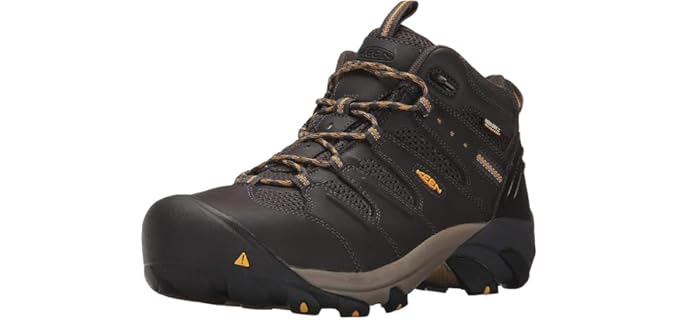
The Keen Lansing is a waterproof, steel-toe men’s work boot, one to consider for HVAC technicians.
- KEEN Utility says the non-marking rubber outsole is oil- and slip-resistant with a lug pattern. It is designed to help you stay steady during HVAC calls in attics, crawl spaces and rooftops.
- Left and right asymmetrical steel toes give a roomier toe box. That adds toe protection for HVAC calls in attics, crawl spaces and rooftops.
- Per the listing, a full-length TPU stability shank adds support. It is designed for comfort through HVAC calls in attics, crawl spaces and rooftops.
- Moisture-wicking textiles sit inside. Moisture control like this may help during HVAC calls in attics, crawl spaces and rooftops.
- Per the listing, a KEEN.DRY waterproof, breathable membrane works with a mesh liner. Dry feet can make a difference during HVAC calls in attics, crawl spaces and rooftops.
- It is maker-rated to ASTM F2413 I/75 C/75 EH (tested per ASTM F2412).[7]
- The outsole is maker-rated to ASTM F2913 for slip resistance.[6]
5


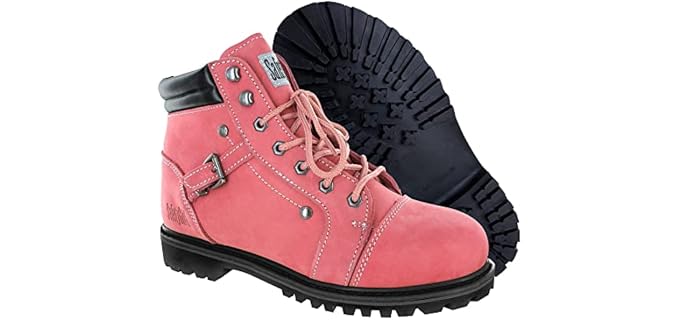
The Safety Girl Pink is a steel-toe women’s work boot, worth a look for HVAC technicians.
- The outsole is oil-resistant. It is designed to help you stay steady during HVAC calls in attics, crawl spaces and rooftops.
- It has a steel safety toe. That adds toe protection for HVAC calls in attics, crawl spaces and rooftops.
- Cushioned insoles sit inside. Extra cushioning like this can be welcome during HVAC calls in attics, crawl spaces and rooftops.
- It uses Goodyear welt construction.
- The nubuck upper is water-resistant.
- Listed features include steel toe, slip resistant, oil resistant.
Index Table: Top Rated Work Boots for HVAC Work
| No. | Product | Image | Features | Brand |
|---|---|---|---|---|
| 1 | Keen Men's Dover 8 Inch - Cold Weather HVAC Work Boot |  |
| Keen |
| 2 | Ariat Men's Groundbreaker - HVAC Work Boot |  |
| Ariat |
| 3 | Ever Boots Men's Ultra Dry - Waterproof HVAC Work Boot |  |
| Ever Boots |
| 4 | Keen Men's Lansing - Steel Toe Waterproof Work Boot |  |
| Keen |
| 5 | Safety Girl Women's Pink - Steel Toe Work Boot | 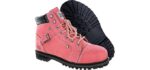 |
| Safety Girl |
Sources
General background on footwear safety and foot health. This is not medical advice; see a doctor or podiatrist about foot pain or a foot condition.
- NHS: Foot pain
- OSHA: 29 CFR 1926.95 – Criteria for personal protective equipment
- OSHA: 29 CFR 1910.136 – Foot protection
- CCOHS: Working in a Standing Position – Basic Information
- CCOHS: Safety Footwear
- ASTM International: F2913 Standard Test Method for Measuring the Coefficient of Friction for Evaluation of Slip Performance of Footwear and Test Surfaces/Flooring Using a Whole Shoe Tester
- ASTM International: F2413 Standard Specification for Performance Requirements for Protective (Safety) Toe Cap Footwear
Update History
- Oct 2026: Product picks checked for availability; removed Keen Lansing Work Boot, Skechers Blais-Bixford Work Boot and Safety Girl Pink Work Boot (unavailable) and added Keen Lansing Work Boot and Safety Girl Pink Steel Toe Work Boot; added Sources (NHS, OSHA, CCOHS, ASTM International)
- Feb 2023: First published